Zirconium crowns in Turkey: built to outlast the tooth they cover.
The complete guide to zirconium crowns in Antalya: types, materials, the process, durability and aftercare. Written for UK patients restoring damaged teeth, replacing failed crowns, or rebuilding their bite after years of wear.
 Reviewed by Assoc. Prof. Dr. Başak ŞekerCo-founder & periodontist at Dentarma · 8,000+ smiles designed since 2005 · Updated 2026
What is a zirconium crown, exactly?
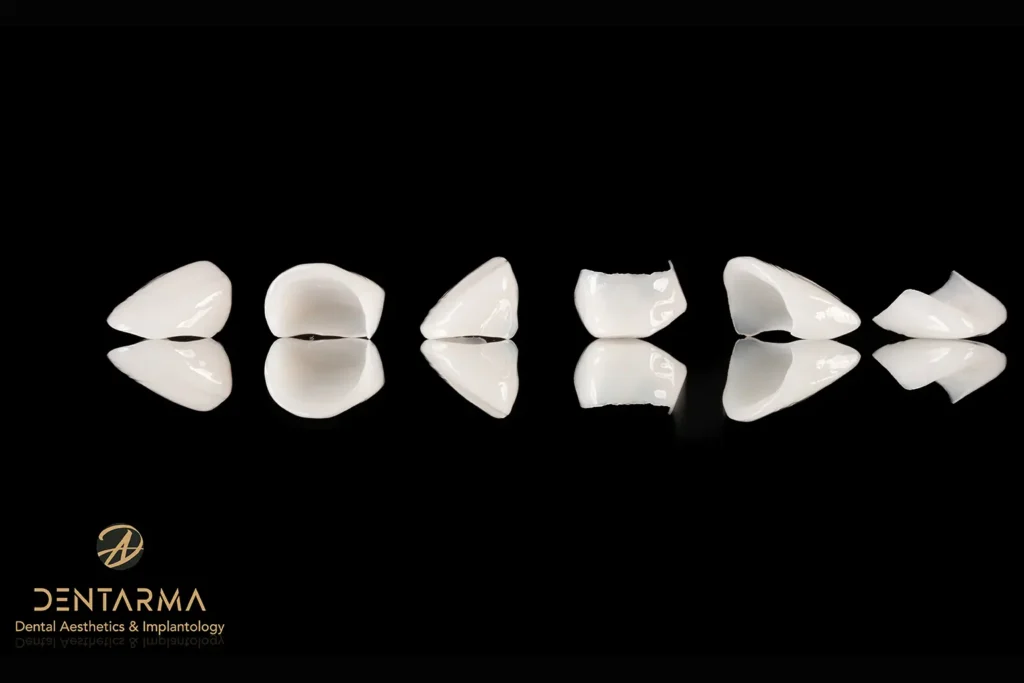
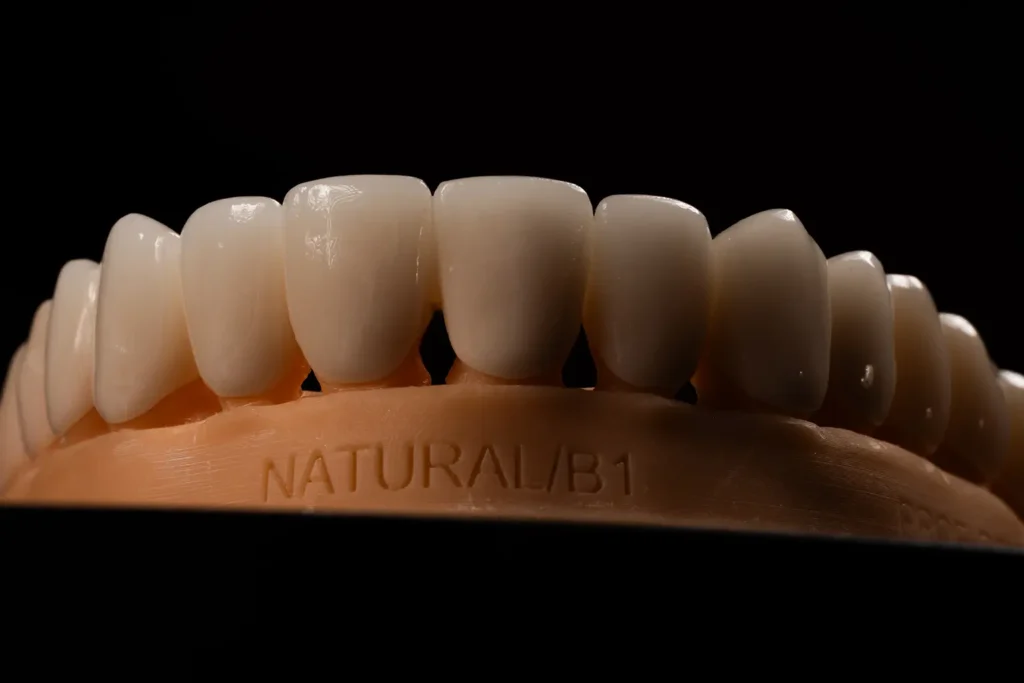
A zirconium crown is a custom-made cap that covers a damaged or restored tooth completely (top, sides, and chewing surface), protecting what's left of the natural tooth and restoring its full function and appearance.
The key word for crowns is protection. A crown is what your dentist recommends when a tooth has been weakened beyond what a filling or veneer can repair: a tooth that's been root-canal treated, fractured, heavily filled across multiple surfaces, or worn down by years of grinding. The crown acts as a structural shell, taking over the chewing forces that the underlying tooth can no longer handle alone.
Zirconium dioxide (zirconia) is the strongest ceramic material currently used in dentistry: it's the same material used in industrial cutting tools, hip and knee replacements, and aerospace components. The crown protecting your tooth is, gram for gram, stronger than the natural enamel it's replacing.
At Dentarma, every crown case is led personally by Assoc. Prof. Dr. Başak Şeker, our co-founder and periodontology specialist. Twenty years of restorative dentistry, every case planned and reviewed by the same specialist who co-founded the practice.
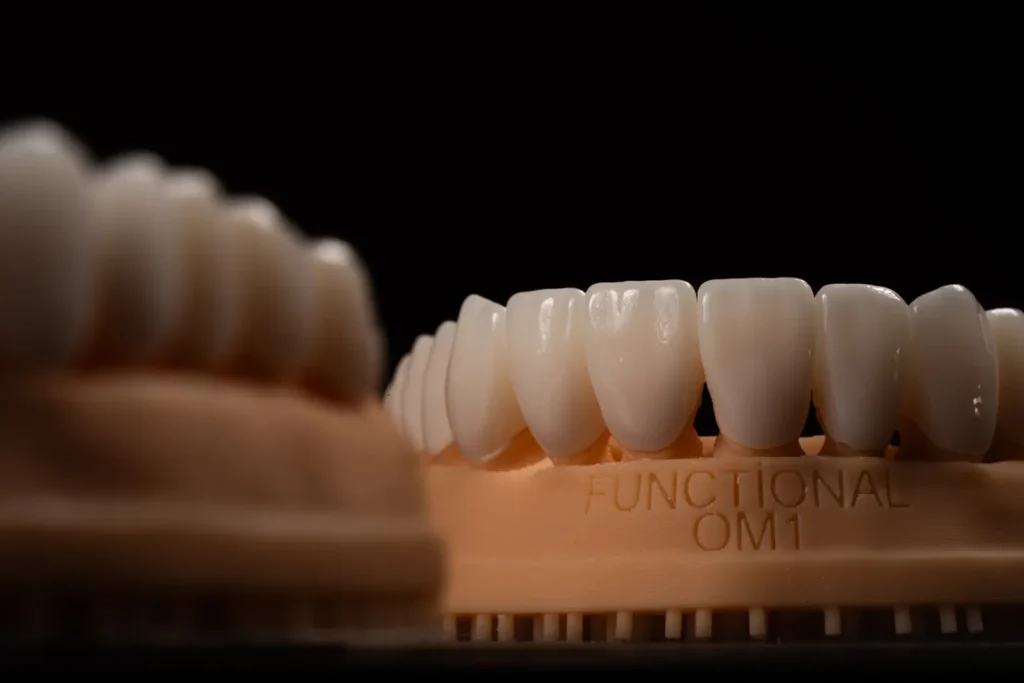 Element 01Zirconia core
A solid block of medical-grade zirconium dioxide, milled by computer-controlled precision to fit your prepared tooth exactly. Provides the structural strength that makes the crown last.
Material: Zirconium dioxide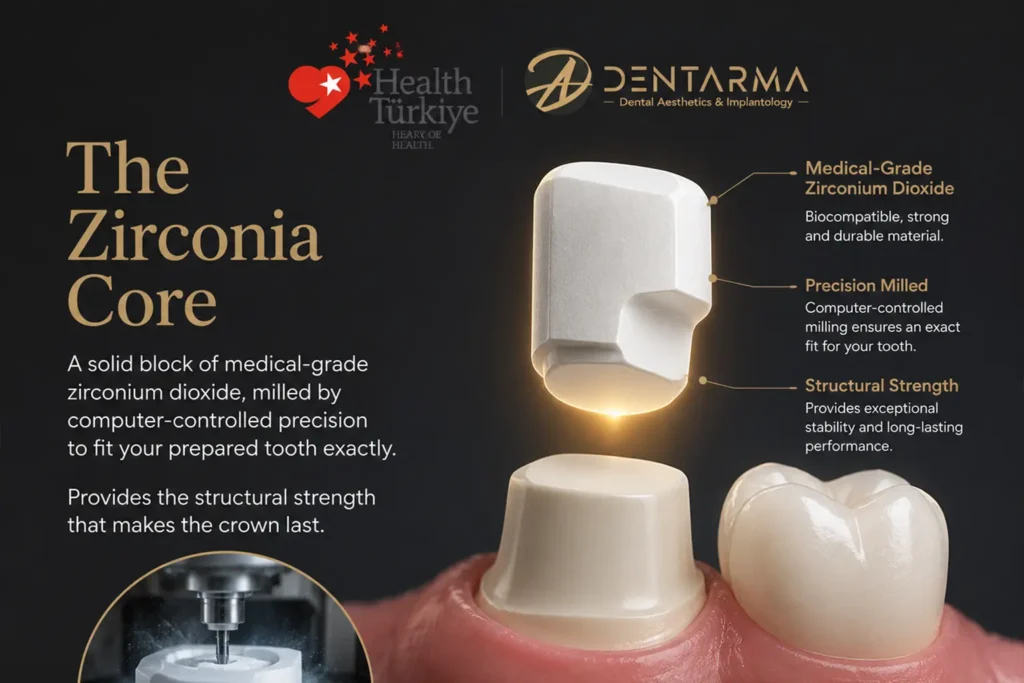 Element 02Aesthetic layer
A thin layer of porcelain (or for monolithic crowns, a stained zirconia surface) replicates natural tooth translucency, shading, and surface texture. Custom-matched to your other teeth.
Material: Layered porcelainElement 03Bonding cementA dual-cure resin or glass-ionomer cement permanently bonds the crown to your prepared tooth. Properly bonded, the crown becomes structurally integrated with the tooth underneath.
Material: Dual-cure resinZirconium crowns vs veneers vs old metal crowns: which is right for you?
Patients often arrive at Dentarma uncertain whether they need crowns or veneers. The decision is mostly clinical (the condition of the tooth) rather than cosmetic. Here's how the three options compare across the criteria that matter.
Four crown options, one specialist.
Different teeth need different crown approaches: front teeth prioritise translucency, back molars prioritise strength, full mouth reconstructions need both. Here's how Dr. Şeker decides which crown is right for each tooth.
Layered zirconia crown
A solid zirconia core with a hand-layered porcelain top layer for maximum aesthetic translucency. The default for front teeth where appearance matters as much as strength.
Monolithic zirconia crown
A single solid block of zirconia with no porcelain layer: the strongest crown type available. Slightly less translucent than layered, but virtually unbreakable under chewing force.
Zirconia + E.max® hybrid
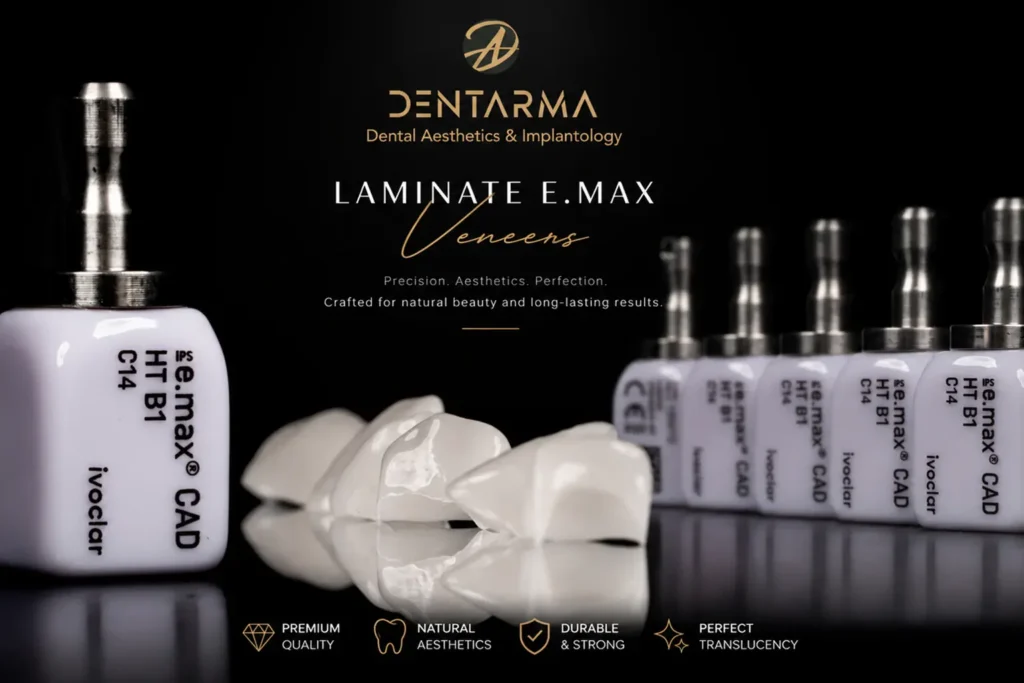
A zirconia substructure with an E.max® lithium disilicate top: the highest-end aesthetic crown. Combines unbeatable strength with the most natural translucency available in modern dentistry.
Implant-supported zirconia crown
A zirconia crown specifically engineered to attach to a dental implant abutment. Used to restore single missing teeth or as part of implant bridges and All-on-X full-arch restorations.
Why premium zirconia matters.
Not all zirconia is the same. The cheapest crowns on the Turkey teeth market are made from low-grade industrial zirconia blocks that fracture more easily and discolour over time. The crowns we use at Dentarma are imported from German and Swiss manufacturers, the same suppliers used by top private clinics in London Harley Street, Munich, and Zurich.
Premium zirconia delivers 1200 MPa flexural strength: three times stronger than E.max® veneer porcelain and significantly stronger than natural enamel. Combined with the hand-layered porcelain top, this gives you a crown that's tougher than the tooth it's covering and indistinguishable from your natural teeth in everyday light.
Every Dentarma crown is supplied with manufacturer documentation that you and your UK dentist can verify independently.
Strength
1200 MPa flexural strength: the strongest dental ceramic material available today.
Biocompatibility
Metal-free, allergen-free, hypoallergenic: the same material used in joint replacements.
Translucency
Modern multilayer zirconia replicates natural enamel light transmission.
Stain resistance
Glass-smooth surface resists tea, coffee, red wine and tobacco staining for decades.
Your crowns are made under the same roof.
Most Turkey clinics outsource their crown work to external dental labs: the patient never knows the lab's name, the technician's qualifications, or the actual quality of the materials being used. Quality control becomes impossible.
At Dentarma, our crowns are designed, milled, and finished in our own in-house laboratory inside the Antalya clinic by a master ceramist on staff. Same building, same week, same quality control, with Dr. Şeker overseeing every case personally.
- 1Same-week turnaround. Crowns designed Monday, milled Tuesday, fitted Friday: no shipping, no delays
- 23Shape and exocad CAD/CAM systems, the same software used by top labs worldwide
- 35-axis precision milling with diamond-tipped cutters for sub-micron accuracy
- 4Master ceramist on staff: the porcelain layer hand-stained and glazed for natural appearance
- 5Certified zirconia blocks only: premium German & Swiss material with manufacturer documentation
- 6Quality control by Dr. Şeker personally: every crown reviewed before fitting, never delegated
From first WhatsApp to final crown.
Crown treatment is one of the fastest comprehensive treatments at Dentarma: most cases are completed in a single visit of 5 to 7 days in Antalya. Bring your X-ray, leave with your new teeth.
Send X-ray and photos via WhatsApp. We respond within 24 hours with treatment plan and quote.
Clinical exam, 3D scans, panoramic X-ray review. Final treatment plan confirmed with Assoc. Prof. Dr. Başak Şeker.
Existing crowns or decay removed. Teeth shaped to receive new crowns. Digital impressions taken.
Crowns designed in CAD, milled from zirconia blocks, fired and layered with porcelain by master ceramist.
Crowns trial-fitted, adjustments made, then permanently bonded. Bite checked, polished, you leave with new teeth.
First UK aftercare check-up at our partner clinic in Bletchingley (Surrey), South Croydon or Uddingston (Glasgow). Ongoing annual reviews.
How long do zirconium crowns last?
Properly placed zirconium crowns are designed to last 15 to 25 years with normal wear, often longer. Many of our patients are still wearing the same crowns we placed in 2008 and 2009, going on 17+ years and counting.
Crown longevity comes down to three things: the strength of the underlying tooth, the precision of the bonding, and the patient's bite habits. Zirconia itself rarely fails; what fails is usually the underlying tooth structure, the cement seal, or the supporting gum tissue. Our job is to optimise all three.
Here's what to expect through the first decade and beyond.
Year 0 to 1Settling and adjustment period
Mild sensitivity to hot and cold for 2 to 4 weeks is normal, particularly if the underlying tooth still has nerve tissue. Bite calibration finalised at your first UK aftercare check-up. Crowns feel like natural teeth within 6 to 8 weeks.
Years 1 to 5Stable performance
Full integration with your bite. No sensitivity. Annual UK aftercare check-ups. Stain-resistant zirconia surface maintains shade. Routine brushing and flossing only, no special maintenance required.
Years 5 to 10Mature wear
Possible minor surface wear from grinding. A night guard prevents this entirely. Cement bond remains strong. Underlying tooth health monitored at annual UK check-ups for any underlying decay.
Years 10 to 15Long-term durability
Most crowns continue performing well. A small percentage of patients may need a single crown replacement due to underlying tooth issues, gum recession, or bond degradation.
Years 15 to 25End-of-life replacement
Many crowns continue functioning well past 20 years. Eventually, replacement is recommended, typically a faster, simpler process than the original treatment because the underlying tooth shape is already prepared.
Are you a good candidate for crowns?
Crowns are recommended when a tooth has been weakened beyond what a filling or veneer can repair. The criteria are mostly about the existing condition of your teeth, not aesthetic goals or bone structure.
Significantly damaged teeth
Large fillings covering more than 50% of the tooth, fractures, severe decay, or worn-down chewing surfaces from grinding.
Root-canal treated teeth
Teeth that have had root canal treatment are structurally weakened and almost always need a crown to prevent fracture.
Failed older crowns
Existing metal-fused crowns with visible grey lines at the gum, chipped porcelain, or discolouration after years of wear.
Healthy gums
Free of active gum disease (gingivitis or periodontitis). Treatable first if needed before crown placement begins.
Sufficient remaining tooth structure
Enough natural tooth left to bond a crown to. Severely broken-down teeth may need an implant instead, assessed from your X-ray during free consultation.
Realistic expectations
Crowns restore function and appearance; they don't transform your smile in the way veneers do. Different goals, different treatments.
No severe grinding, or willing to wear a night guard
Heavy nighttime grinding (bruxism) significantly reduces crown lifespan if untreated. A custom night guard solves this for most patients.
Commitment to aftercare
Twice-daily brushing, daily flossing around crown margins, and regular professional cleaning. The underlying tooth still needs care.
Your aftercare network is in the UK.
Every Dentarma crown patient gets free post-treatment check-ups, bite adjustments, and professional polishing at one of three GDC-registered partner clinics across the UK, chosen so over 90% of UK patients are within 90 minutes of an aftercare appointment.
- All UK aftercare check-ups, bite adjustments and emergency triage are covered by your Dentarma package at no additional cost.
- 5-year warranty on all zirconium crowns placed by Dentarma. Free replacement if a crown chips, fractures or debonds within warranty.
- Direct WhatsApp access to Assoc. Prof. Dr. Başak Şeker for any concerns or questions about your crowns, for life.
Crown risks, and how we manage them.
Modern zirconium crowns are one of the most predictable treatments in restorative dentistry, with documented success rates above 95% at 10 years across decades of clinical research. There are still real risks worth understanding before you commit.
Temporary sensitivity to hot and cold.
Common short-term side effect, particularly when the underlying tooth still has nerve tissue. Affects around 30 to 40% of patients in the first 2 to 4 weeks after fitting.
Sensitivity toothpaste prescribed at fitting. Almost always resolves within 4 weeks. Persistent sensitivity past 6 weeks: bring it up at your UK aftercare appointment, free to address.
A crown cracks, chips, or fractures.
Extremely rare with monolithic zirconia (less than 1% in 10 years), slightly higher with layered zirconia (porcelain layer can chip). Almost always caused by trauma or untreated grinding.
5-year warranty covers free replacement of any chipped or fractured crown. Custom night guard provided to all heavy grinders. Choice of monolithic vs layered crown matched to your specific bite forces.
Decay forms under the crown over time.
If the cement seal at the gum line breaks down, bacteria can reach the underlying tooth and cause secondary decay. Usually preventable with good oral hygiene and regular check-ups.
Hospital-grade isolation protocols, dual-cure resin cement under rubber dam isolation. Annual UK aftercare X-rays catch underlying decay early. Patient education on flossing technique around crown margins.
A crown comes loose or falls off.
Can happen if bonding wasn't done properly (poor moisture isolation, inadequate cement curing) or if cement degrades over many years. Rare with proper protocols and modern adhesive cements.
Hospital-grade isolation protocols, dual-cure resin cement, every case bonded under rubber dam. If a crown debonds within 5 years, we re-bond or replace free of charge.
Gum recession or irritation around the crown.
A long-term cosmetic and clinical issue: natural age-related gum recession can eventually expose the crown-tooth boundary, creating a visible margin at the gum.
Annual UK aftercare check-ups catch early recession. Margin design optimised by Dr. Şeker (a periodontology specialist) to delay this issue. Replacement at 15+ years if needed.
“Premium” upgrades or extras added on arrival.
A common Turkey clinic risk: not clinical, but financial. The most common patient complaint in dental tourism. Clinics promote one price online and quote another in person.
Your written quote is fixed before you commit. The only changes happen if a clinical issue not visible on your X-ray is discovered, and only with your written agreement before any extra work is done.
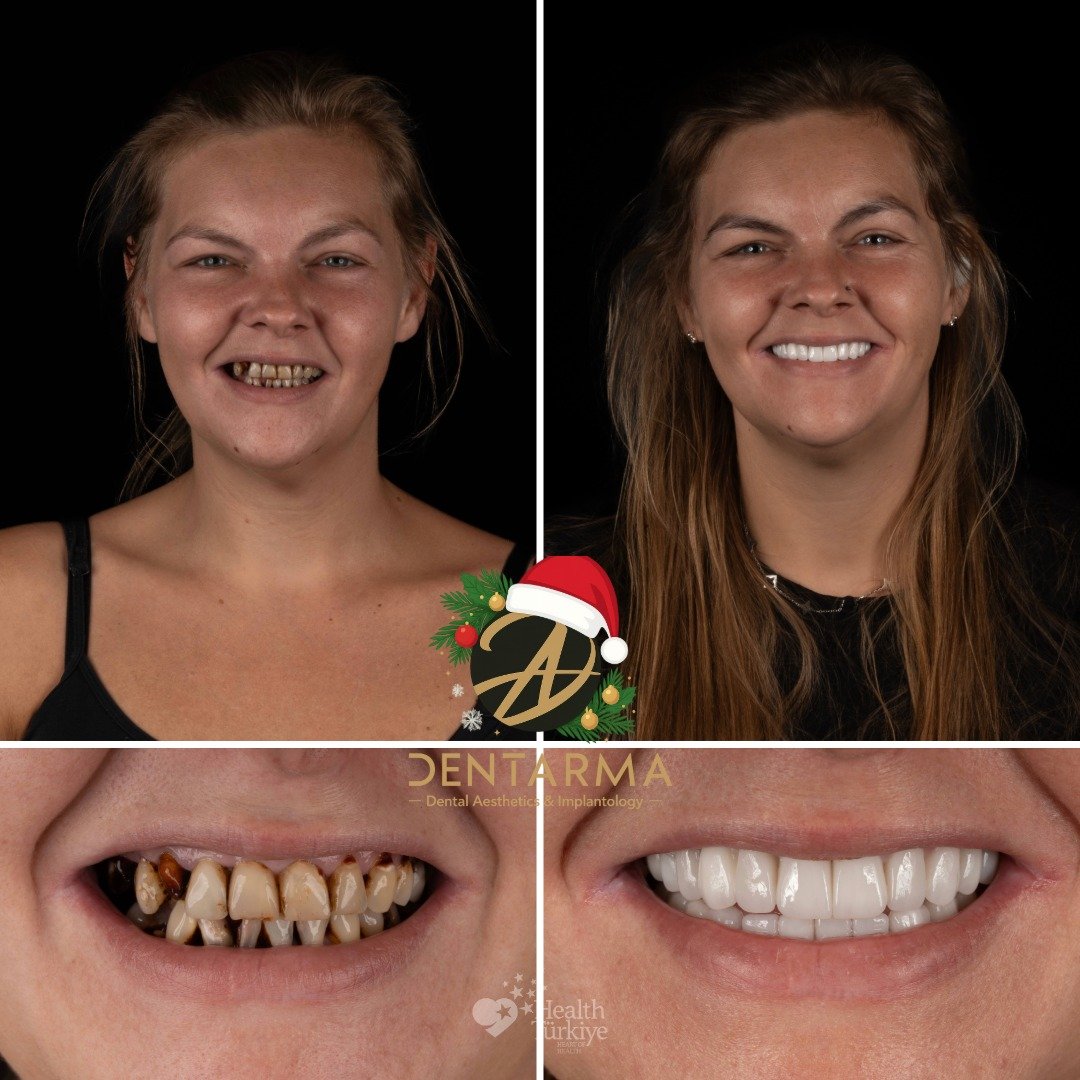
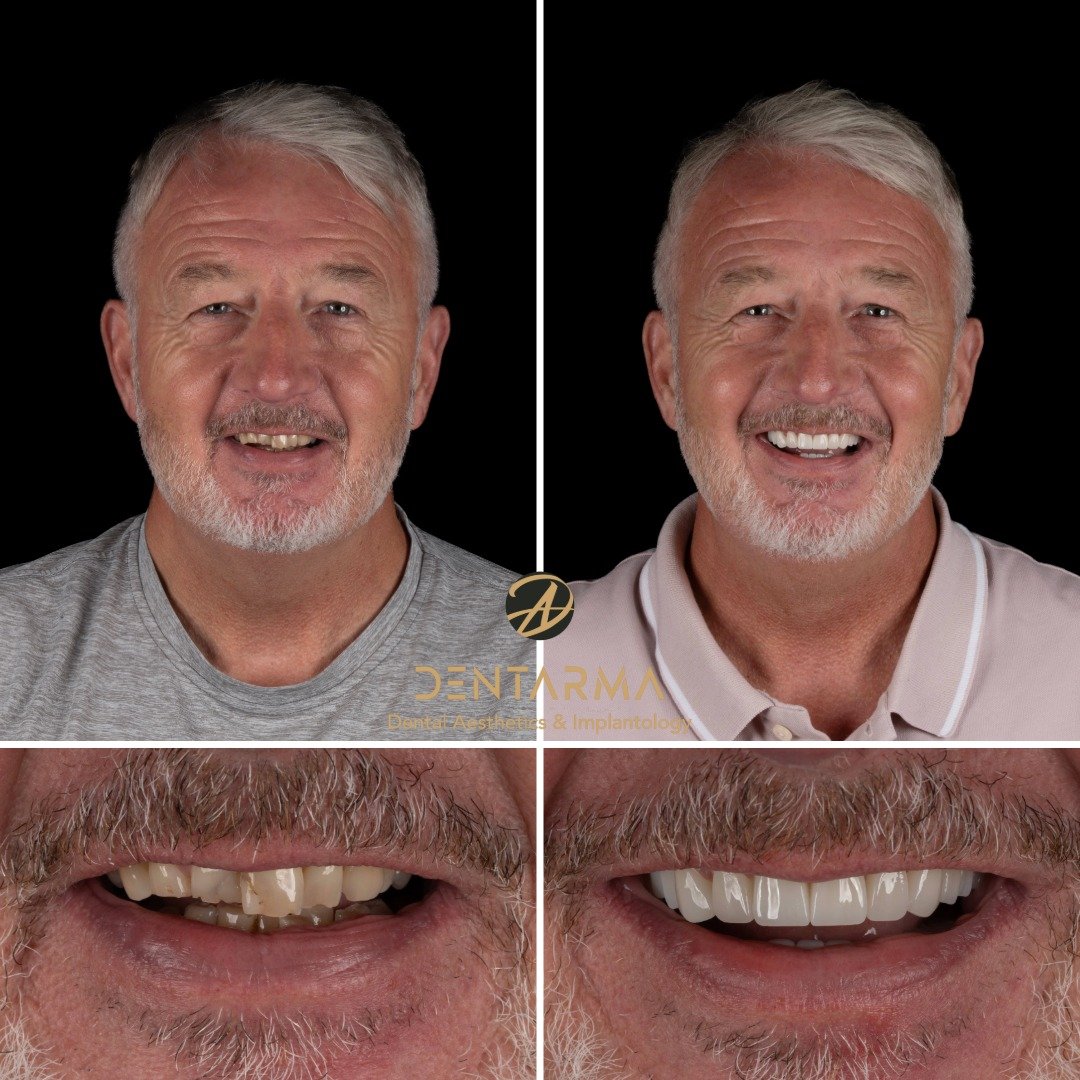
Real crown cases, real patients.
Every case is a Dentarma crown patient who has consented to share their transformation. No stock photography. No AI. No retouching beyond standard clinical lighting correction.
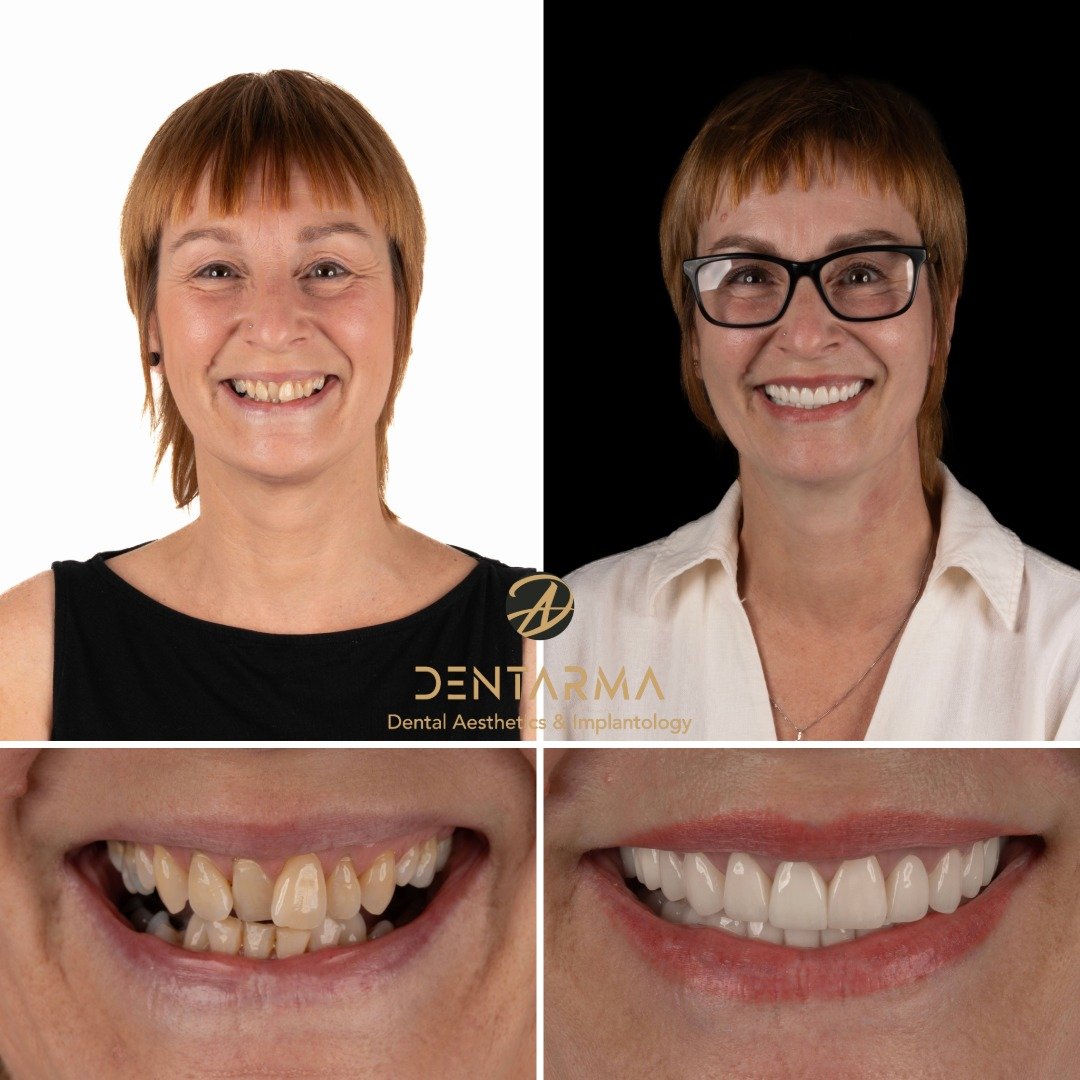
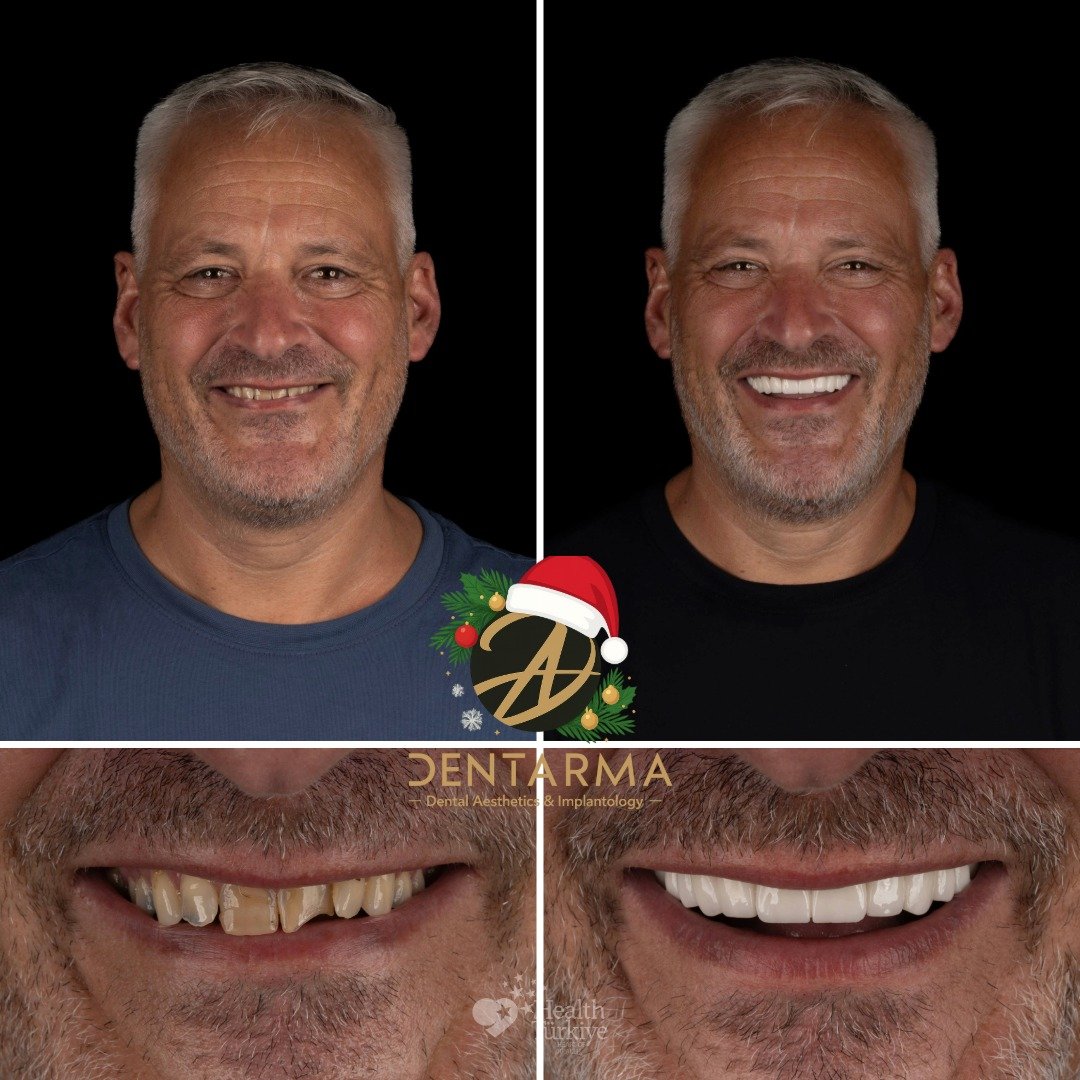
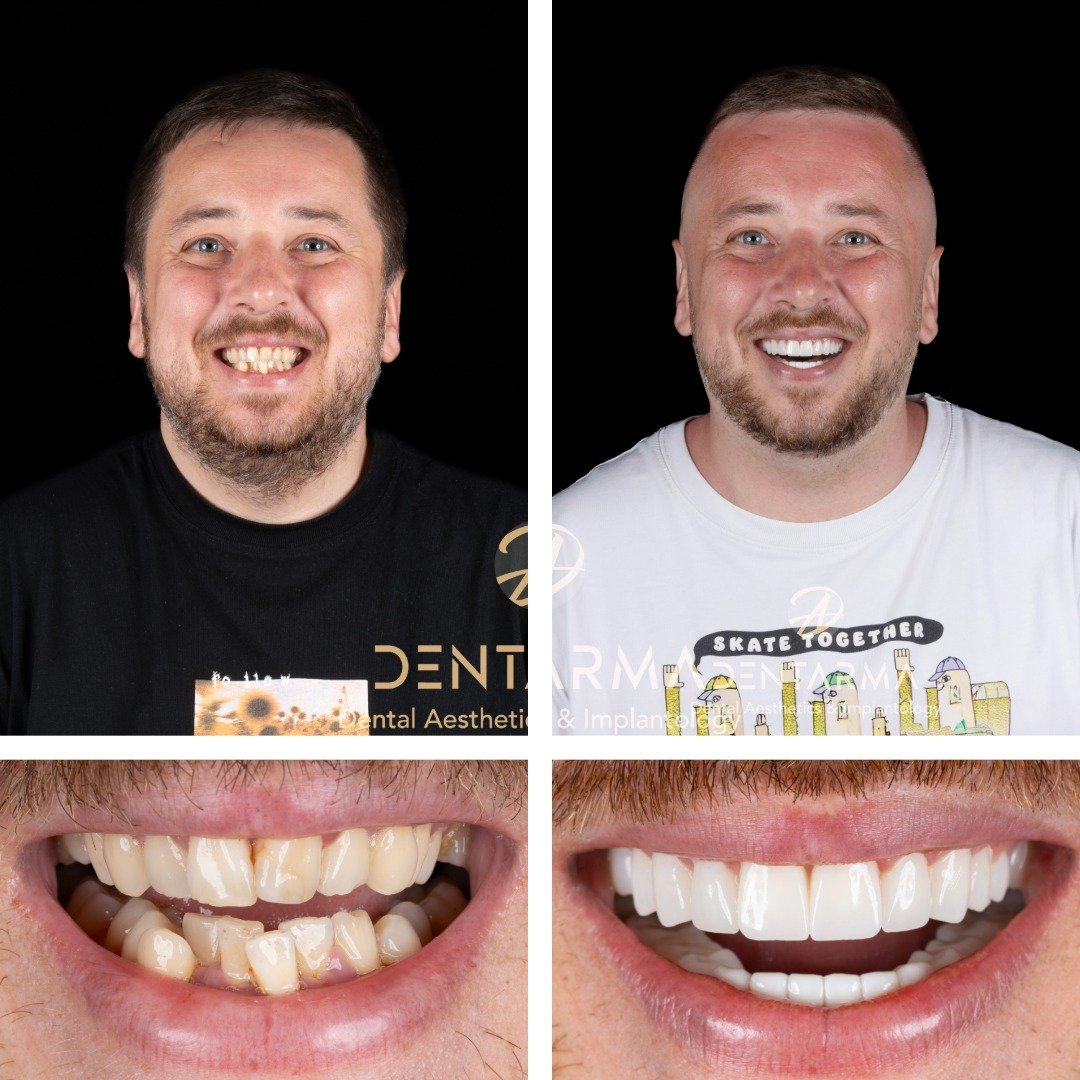
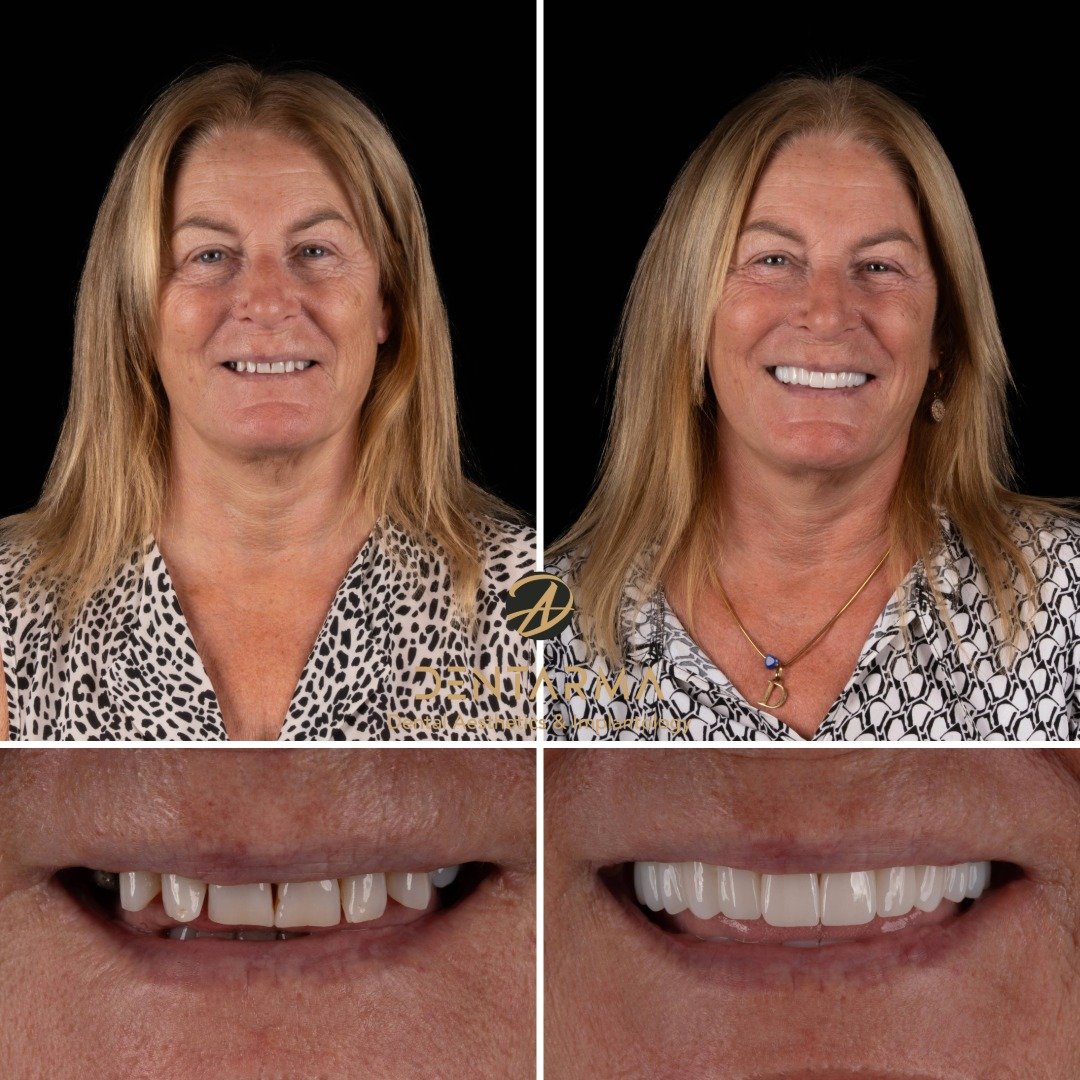
 ▶
 ▶
 ▶
 ▶
Transparent pricing, fixed in writing.
Every Dentarma crown package is all-inclusive, covering the crowns, in-house lab work, hotel accommodation, VIP transfers, all medications, and UK aftercare. The price you're quoted is the price you pay.
- Premium German & Swiss zirconia
- In-house lab production
- Treatment led by Assoc. Prof. Dr. Başak Şeker
- Hotel accommodation
- VIP airport and clinic transfers
- All medications
- UK aftercare
- 5-year crown warranty
Zirconium crowns in Turkey: everything else you might want to know.
Crowns or veneers: which do I actually need?
It depends on the condition of the underlying tooth. Crowns are for damaged, weakened, or root-canal treated teeth: they cover the tooth completely and provide structural protection. Veneers are for cosmetic improvement of mostly healthy teeth: they cover only the front surface. Send us your X-ray and a photo of your smile, and we'll tell you honestly which is right for your case.
Are crowns painful to get?
Crown preparation is performed under local anaesthesia, so the procedure itself is painless. Most patients describe it as no more uncomfortable than a routine filling. Mild sensitivity to hot and cold for 2 to 4 weeks afterward is normal: sensitivity toothpaste is provided and almost always resolves within a month.
How long do zirconium crowns last?
Properly placed zirconium crowns are designed to last 15 to 25 years, often longer. Long-term studies show survival rates above 95% at 10 years and around 85% at 20 years. Many of our patients are still wearing the same crowns we placed in 2008 and 2009, going on 17+ years and counting. We provide a 5-year warranty for free replacement.
Are zirconium crowns the same quality as UK crowns?
When the material is the same brand (premium German or Swiss zirconia), placed by a qualified specialist, in a properly equipped clinic: yes, identically. The crowns we place use the same zirconia blocks supplied to top London Harley Street clinics. The price difference reflects operating costs in Antalya (clinic rent, staff salaries, taxation), not material or clinical quality.
How much of my tooth gets removed?
Zirconium crowns require approximately 1.5 to 2mm of tooth structure removal all around: more than a veneer (0.3 to 0.7mm) but typical for any crown work, including UK private clinics. This is non-negotiable for crown placement, but it's exactly why crowns can structurally protect teeth that veneers cannot. Severely broken-down teeth that can't support a crown might need an implant instead, assessed during free consultation.
Can I have a crown if I've had a root canal?
Not just yes: strongly recommended. Root-canal treated teeth are structurally weakened because the nerve and blood supply have been removed. Without a crown to protect them, root-canal teeth fracture in approximately 30% of cases within 5 years. With a properly fitted crown, that fracture risk drops to under 5%. This is why most UK and US dentists insist on crowning root canal teeth.
Will my zirconium crowns look fake?
Not when designed correctly. Modern multilayer zirconia and zirconia + E.max® hybrid crowns replicate natural enamel translucency very effectively. The “fake” look from older crowns came from metal-fused porcelain, where a metal substructure underneath created an opaque grey appearance. All Dentarma crowns are 100% metal-free. Assoc. Prof. Dr. Başak Şeker matches shade and translucency individually for each patient using digital colour matching.
Can I have crowns if I grind my teeth?
Yes, but you'll need a custom night guard. Heavy grinding (bruxism) significantly reduces crown lifespan if untreated. We'd typically recommend monolithic zirconia (no porcelain layer to chip) for heavy grinders, and a custom night guard included with our crown packages. We screen for grinding during your consultation and discuss this with every patient.
How do I clean crowns?
Exactly like natural teeth: twice-daily brushing with a soft-bristled brush and non-abrasive toothpaste, daily flossing (especially carefully around the crown margins where they meet the gum), and routine professional cleaning. No special tools or maintenance routine required. The crown is bonded permanently; you cannot remove it for cleaning.
Will my crowns stain over time?
Zirconia is highly stain-resistant, significantly more so than natural enamel. Tea, coffee, red wine and tobacco do not stain the zirconia itself. The bonding line at the gum can occasionally pick up minor staining, which annual UK aftercare polishing addresses easily and free of charge.
What about old metal-fused crowns I already have: should I replace them?
Possibly. Old metal-fused crowns commonly fail in three ways: visible grey line at the gum (porcelain wears thin or gum recedes), porcelain chipping off the metal substructure, or secondary decay underneath. Modern zirconium crowns avoid all three issues. If your existing crowns are 15+ years old, showing grey lines, or you have allergic concerns about the metal, replacement is usually a good investment. We assess this from photos and X-rays during free consultation.
How long is the procedure in Antalya?
Most crown cases are completed in a single visit of 5 to 7 days. Day 1: examination and treatment plan finalised. Day 2: tooth preparation and digital impressions. Days 2 to 4: in-house lab production. Days 5 to 7: trial fit, adjustments, final bonding. You leave with permanent crowns in place; no temporaries needed for most cases.
What if a crown fails after I'm home?
If a Dentarma zirconium crown fails due to material defect or bonding failure, we replace it free of charge under our 5-year warranty, including the cost of the replacement crown and fitting. Failures due to trauma, untreated grinding, or poor maintenance are not covered, but UK aftercare appointments help catch issues early before they become serious.
What happens at the UK aftercare appointment?
UK aftercare appointments at our partner clinics in Glasgow, Surrey, or North Croydon include: routine check-up of crowns and gum line, professional polishing, bite adjustments if needed, X-ray examination of underlying tooth health (annual), and triage of any concerns. Major repairs or full replacements happen at Dentarma in Antalya under your warranty.
Can I eat normally with crowns?
Almost anything. Once your final zirconium crowns are bonded, you can eat normally, including steak, apples, nuts, toast, and even ice (though we don't recommend ice for any teeth, natural or crowned). Avoid using your teeth as tools (opening packets, biting nails). These rules apply to natural teeth too.
Send us your X-ray. Get a written quote in 24 hours.
The fastest way to know what crown treatment will cost and what's right for your case is to send us a panoramic X-ray and a few photos of your smile. We respond personally within 24 hours, and most messages get a reply within an hour.