
Should you replace your dentures with implants?
A conventional denture rests on a jaw ridge that keeps shrinking: a 25-year study of complete denture wearers found the bone loss continues throughout, about four times faster in the lower jaw than the upper. Implants anchor your teeth in the bone instead of resting on it. There are two ways to do it. An implant-retained (snap-in) denture clips onto 2 to 4 implants per jaw, stays put while you eat and speak, and still comes out at night to clean; expert consensus statements from McGill (2002) and York (2009) concluded that a two-implant lower overdenture should be the minimum first-choice treatment for people with no lower teeth. Fixed teeth (All-on-4 / All-on-6) are a bridge of 10 to 12 teeth screwed onto 4 to 6 implants per jaw that stays in your mouth and has no palate plate. Which one suits you is decided from a 3D CBCT scan, your gum and general health and what you want, not from how long you have worn dentures, and it is rarely ruled out by bone loss. Both usually take two trips 3 to 6 months apart.
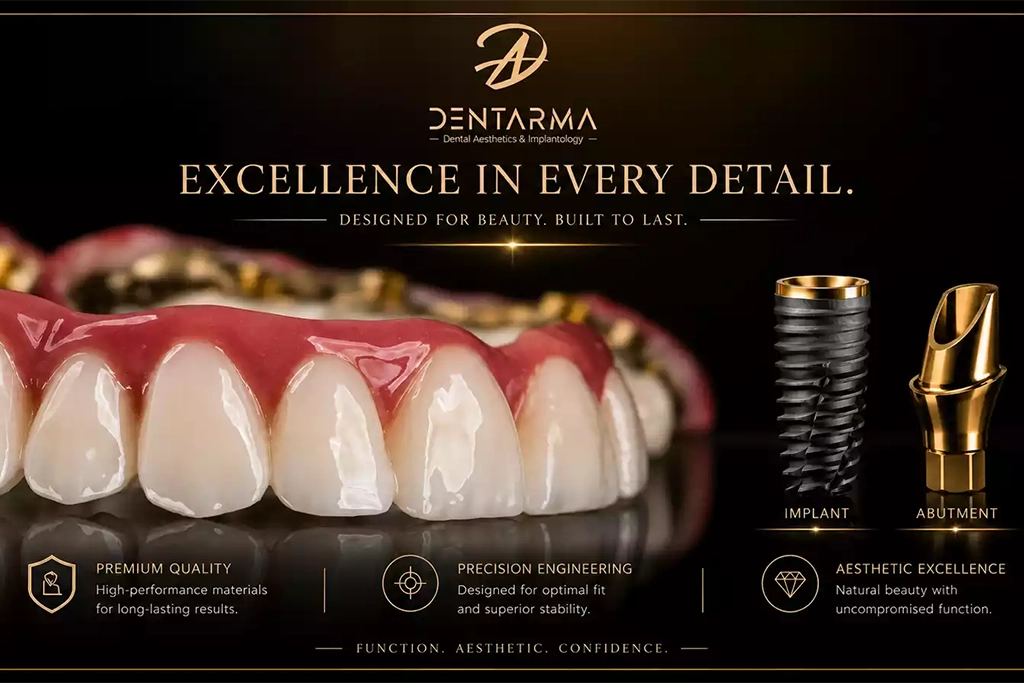
At DentArma, a professor-led dental center in Antalya, a single implant costs £300 to £800, an implant-retained overdenture £3,500 per jaw and fixed All-on-4 teeth for both jaws from £5,950, confirmed in writing after your scan.
The confusion starts with the words. “Denture implants”, “implant dentures”, “All-on-4 implant dentures”, “snap-in teeth”, “overdentures”, “hybrid prosthesis”: clinics and patients use them for two quite different things, a removable denture held by implants, and a fixed set of teeth on implants that only a dentist can remove. They differ in how many implants you need, how much bone you need, what they cost, how you clean them and how they feel. A quote that says “implant dentures” without saying which is not a quote you can compare.
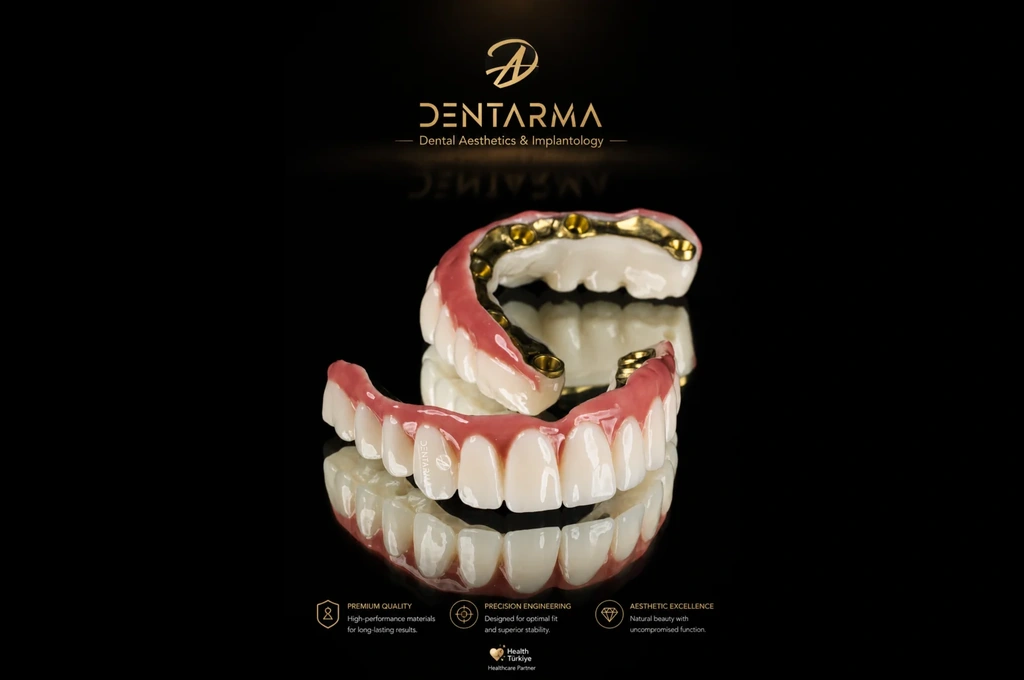
DentArma places both, so the recommendation can follow your scan. Our standing position is the same as on every treatment: the plan that keeps the most of what you have and asks the least of what you don’t, which for a lower jaw with little bone may be a two-implant snap-in denture, and for a patient who never wants to take their teeth out again may be All-on-6. If you already know you want fixed teeth, the detailed guides to All-on-4 and All-on-6 go deeper; this page is for the decision before that.
Snap-in dentures vs fixed All-on-4 teeth: which is right for you?
The same questions, answered for the denture you have now and the two implant routes that replace it. Prices are DentArma’s where confirmed and market ranges across Turkish clinics elsewhere.
| Question | Conventional denture | Implant-retained (snap-in) denture | Fixed teeth (All-on-4 / All-on-6) |
|---|---|---|---|
| What it is | An acrylic plate resting on the gum, held by suction, the lips and adhesive | A removable denture that clips onto 2 to 4 implants per jaw via locator or ball attachments (an overdenture) | A fixed bridge of 10 to 12 teeth screwed onto 4 to 6 implants per jaw (a hybrid prosthesis); no palate plate |
| Removable? | Yes: out every night | Yes: you unclip it to clean it and sleep | No: it stays in; only a dentist unscrews it for maintenance |
| Implants per jaw | None | 2 to 4 | 4 to 6 |
| How it holds | Suction and adhesive; the lower one moves on a shrunken ridge | Firmly on the attachments; no adhesive; slight movement is designed in | Rigid, like natural teeth; chewing force goes into the implants |
| What happens to the bone | The ridge keeps shrinking under the plate, so the fit loosens and relines are needed every few years | Implants transmit load into the bone they sit in; the ridge between them is still covered by the denture | Implants transmit load into the bone they sit in; nothing rests on the ridge |
| Bone needed | None, but the less there is the worse it fits | Least of the implant options: often possible where a fixed bridge is not | Most; angled back implants in the All-on-4 design often avoid grafting |
| Trips to Turkey | Not applicable | Usually two, 3 to 6 months apart, about a week each | Usually two, 3 to 6 months apart, about a week each |
| Cleaning | Out, brush, soak | Out, brush, soak; clean around the implants; attachment inserts replaced periodically | Brush, clean under the bridge with floss threaders or a water flosser; professional cleaning at check-ups |
| Market range across Turkish clinics (published 2026 price guides) | Not applicable | No comparable published range; generally below a fixed bridge because it uses fewer implants and a removable prosthesis | All-on-4 roughly £2,100 to £7,200 per jaw (≈ €2,500 to €8,450) |
| DentArma price | Not applicable | £3,500 per jaw; single implants £300 to £800 by brand | All-on-4 both jaws from £5,950; All-on-6 both jaws from £6,950 |
| What wears | The fit; the teeth; relines every few years | The plastic inserts in the attachments; the denture itself over time | The bridge teeth; occasional chip repair; the implants themselves showed 96.4% survival at 10 years in a 2019 systematic review |
| Best for | Patients who cannot or do not want to have implants | Less bone, a smaller budget, or patients who prefer to be able to take their teeth out to clean them | Patients who want teeth that feel and work most like their own and that they do not take out |
Are you a candidate? The 7 factors that decide
| Factor | What it means for implants | How DentArma assesses it |
|---|---|---|
| 1. Bone height and width | Implants need bone to sit in. Years of denture wear reduce it, most of all in the lower front jaw and under the upper sinuses. Short bone narrows the options; it rarely closes them: angled implants, shorter implants, grafting or a sinus lift, and for severe upper-jaw loss zygomatic implants anchored in the cheekbone. | A 3D CBCT scan on arrival (or one from home sent before you travel) measures the bone in millimetres; the plan states which route it supports and whether any grafting is needed, before anything is booked. |
| 2. Gum and jaw health | Infection around any remaining teeth or roots, and untreated gum disease, raise the risk of implants failing later. | Reviewed by Assoc. Prof. Dr. Başak Şeker (Periodontology); unsaveable teeth and infection are dealt with on the first visit, before or with implant placement. |
| 3. General health and medication | Uncontrolled diabetes, medication for osteoporosis or bone disease, immune-suppressing treatment and previous radiotherapy to the jaw can affect healing and may need a doctor’s clearance first. | A medical history form before travel; where needed, the plan asks for your GP’s or specialist’s confirmation before surgery is scheduled. |
| 4. Smoking | Smoking is associated with higher implant failure and slower healing. It does not rule implants out, but the risk is yours to weigh with the facts in front of you. | Discussed openly at planning; stopping or reducing around surgery and healing is advised. |
| 5. Age | Not a barrier by itself. Patients in their seventies and eighties are treated routinely when the medical history allows; the consensus recommendation for a two-implant lower overdenture was written for people with no lower teeth, most of whom are older. | Health, not date of birth, decides. The plan is sized to what you want to maintain: a snap-in denture is easier for some patients to keep clean than a fixed bridge. |
| 6. Bite and grinding | Heavy grinding or clenching loads implants and bridge teeth; it may call for more implants, a stronger design or a night guard. | Assessed by Prof. Dr. Emre Şeker (Prosthodontics) when the bite is designed; a night guard is built into the plan where needed. |
| 7. What you actually want | Fixed teeth feel most natural but cost more and need more bone and more cleaning skill; a snap-in denture is usually cheaper, easier to clean and possible with less bone. Neither is “better” for everyone. | The written plan sets out both routes where both are possible, with the price, the trips and the maintenance of each, and you choose. |
The one thing long-term denture wearers should not do is wait for the decision to make itself. The lower jaw loses bone fastest, so the options are widest the earlier the scan is taken. Sending a recent panoramic X-ray or CBCT with your photographs lets the professors tell you before you travel which routes your bone supports, and if the answer is a snap-in denture rather than All-on-6, you will be told that too.
Six facts behind how DentArma plans implant treatment for denture wearers
DentArma Dental Clinic is a professor-led dental center in the Lara district of Antalya, Turkey, founded by Prof. Dr. Emre Şeker and Assoc. Prof. Dr. Başak Şeker and authorised by the Turkish Ministry of Health to treat international patients. Every claim below can be checked independently.
Professor-led planning
Prosthodontics is the specialty of dentures and implant bridges alike. Prof. Dr. Emre Şeker (Prosthodontics & Implantology) writes the plan; Assoc. Prof. Dr. Başak Şeker (Periodontology) assesses the bone and gums every implant depends on. Verify via PubMed and YÖK Akademik.
8,000+ patients, over 20 years
More than 8,000 international patients treated over two decades, from the UK, Europe and beyond: a track record you can research in reviews and in the case gallery.
Full in-clinic team
A 32-person team of clinicians, nurses, treatment coordinators and patient-care staff. Planning, surgery, prosthetic design and aftercare coordination are handled by the clinic’s own team.
Verified review score
4.8 / 5 across 750+ verified Google and Trustpilot reviews, including 430+ on Trustpilot: platforms the clinic cannot edit.
Both routes, one plan
DentArma places implant-retained dentures and fixed All-on-4 / All-on-6 bridges, so the written plan can set out both where both are possible, with the price, the trips and the upkeep of each, and the choice is yours.
Who should plan your implants? Start with the credentials
Replacing a full denture with implants is one of the most involved treatments in dentistry: surgery, bone and gum health, and a prosthesis that has to work for years. Ideally it is planned by, or reviewed with, the two specialties trained for it.
Prof. Dr. Emre Şeker · Prosthodontics & Implantology
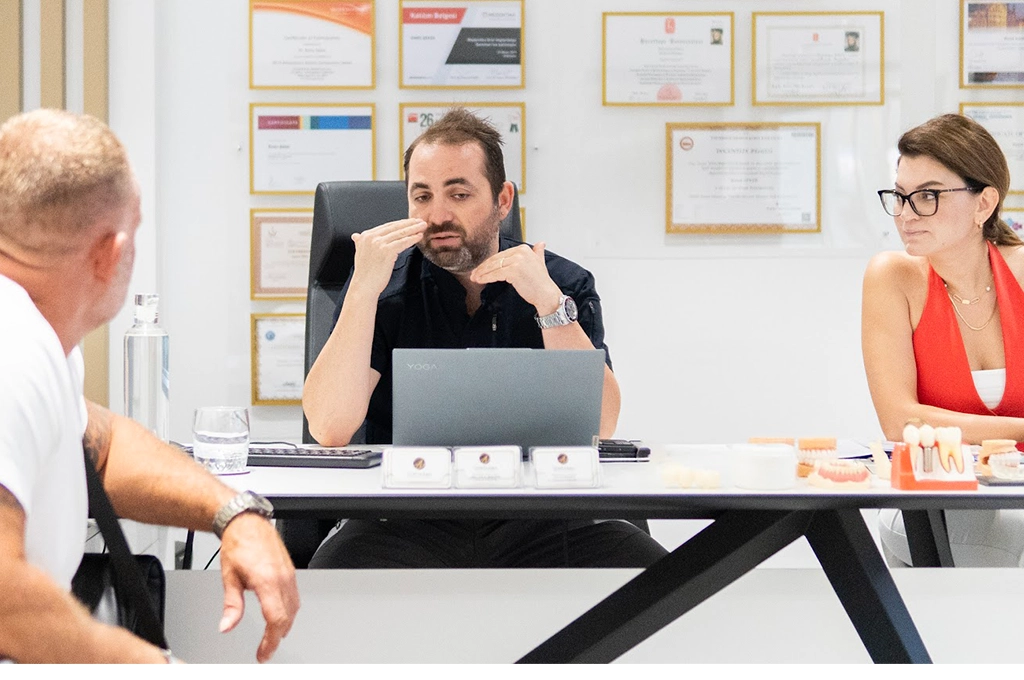
Professor of Prosthodontics and Implantology, and founding professor at DentArma. Personally plans and reviews full-arch implant, overdenture and full mouth cases for international patients. Prosthodontics is the specialty that designs what sits on the implants (the overdenture or the fixed bridge) and how it bites, cleans and wears over years. Dentures are its home ground, which is why the decision between snap-in and fixed belongs to it. His research is indexed on PubMed, so you can read it before you send an X-ray.
Assoc. Prof. Dr. Başak Şeker · Periodontology
Specialist in periodontology and founding professor at DentArma. Assesses the bone and gum health every implant depends on, before and after placement. One of the commonest late problems with implants is peri-implantitis, inflammation of the gum and bone around an implant, the implant equivalent of gum disease. Periodontology is the specialty that prevents and treats it. A periodontal assessment before full-arch implant work is built into the DentArma plan, and it is worth asking any clinic whether it is part of theirs.
How to verify any dentist yourself: ask for the full names of the dentists who will plan and place your implants and who will make the prosthesis. Academic titles and publications of Turkish university staff are listed on YÖK Akademik. Then ask: “Which route does my scan support, snap-in or fixed, and why?” A plan should be able to tell you, in millimetres from the scan, which route your bone supports.
Named implants, named parts. Documented proof
An overdenture or a fixed bridge will need parts over its life: attachment inserts, screws, a replacement tooth. That is only possible if everyone knows exactly which implant system is in your jaw. DentArma uses internationally manufactured systems found in private practice in the UK, Europe, North America and Australia, and records every unit.
Every patient receives an Implant Passport listing the brand, model and the LOT and REF numbers that trace each implant to its production batch, and a Crown Certificate for the bridge. A dentist in any country can identify the exact components and order compatible parts if your treatment ever needs attention.
- Implant systems: Straumann, Nobel Biocare, Neodent (Straumann Group), Osstem, S.I.N. by Henry Schein, all with attachment and bridge components available internationally.
- Fixed bridges: Dental Direkt zirconia (Germany), a CAD/CAM zirconia also used by UK dental laboratories for full-arch bridges.
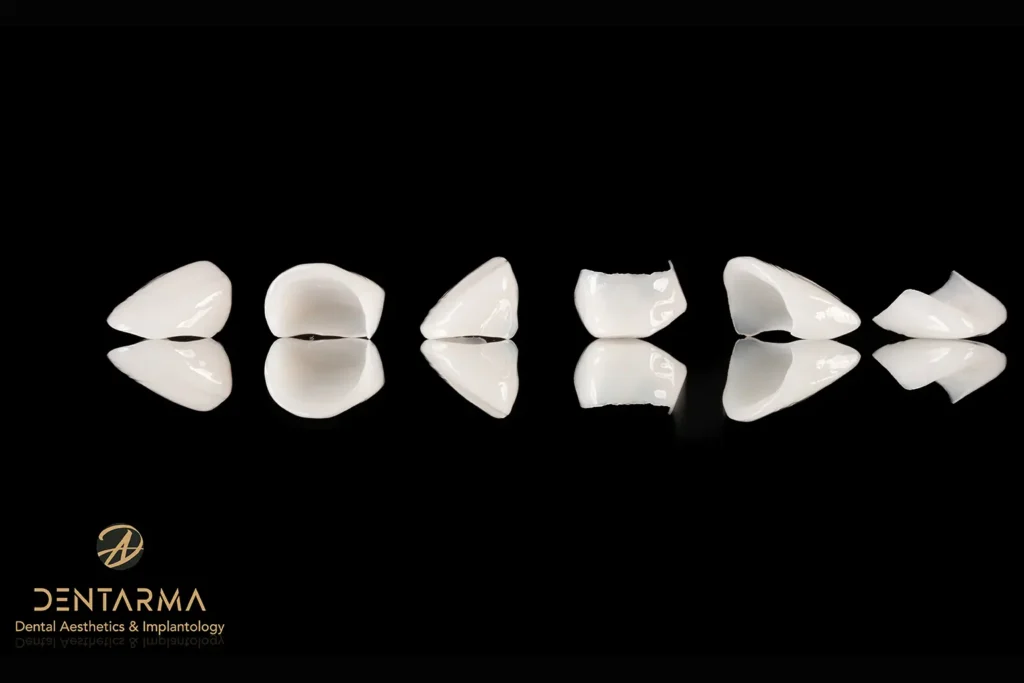
- Crowns: Dental Direkt zirconia and Ivoclar IPS e.max (Liechtenstein).
- Guarantees in writing: lifetime manufacturer guarantee on implants; 5-year clinic warranty on crowns and bridges.
How to read reviews from former denture wearers like an expert
The useful reviews are written after the second trip, not after the first. Look for whether the patient had a snap-in denture or a fixed bridge, how the temporary teeth were to live with for three to six months, what eating is like now, and how cleaning went. Then read the negative reviews and, above all, how the clinic replied. Patients tell their stories in their own words on the testimonials page.
Which implant options for denture wearers does DentArma offer?
DentArma offers every route from a two-implant snap-in denture to a fixed All-on-6 bridge, so the recommendation can follow your scan.
Implant-retained (snap-in) denture · removable, 2 to 4 implants
A denture that clips onto 2 to 4 implants with locator or ball attachments. Usually the least bone, the lower cost and the simplest cleaning of the implant routes, and the consensus first-choice minimum for a lower jaw with no teeth.
All-on-4 fixed teeth · 4 implants
A fixed bridge of 10 to 12 teeth on four implants per jaw, the back two angled to use the denser bone at the front and often avoid grafting. Two trips.
All-on-6 fixed teeth · 6 implants
The same fixed bridge on six implants per jaw, for more support where the bone allows it or the bite demands it. Two trips.
Full mouth dental implants · both jaws
Upper and lower together: fixed, snap-in, or one of each, which is common when the upper jaw has more bone than the lower.
Implant bridges & single implants · partial dentures
If you wear a partial denture, the missing teeth can be replaced with an implant bridge or single implants while every healthy tooth stays where it is.
How much does it cost to replace dentures with implants in Turkey?
A published 2026 price guide puts All-on-4 across Turkish clinics at roughly £2,100 to £7,200 per jaw (≈ €2,500 to €8,450). The spread inside that range comes mainly from the implant brand, whether the final bridge is included or only the temporary teeth, and what the package leaves out. An implant-retained denture generally costs less than a fixed bridge because it uses fewer implants and a removable prosthesis.
At DentArma a single implant costs £300 to £800 depending on the brand, an implant-retained overdenture £3,500 per jaw, and fixed All-on-4 teeth for both jaws from £5,950 including the final zirconia bridges, with hotel accommodation and VIP transfers included in full mouth packages for every visit. The price is finalised in writing after your 3D scan and before any treatment.
| DentArma | Price |
|---|---|
| Single implant, by brand | £300 to £800 |
| Implant-retained (snap-in) denture, per jaw | £3,500 |
| All-on-4 fixed teeth, both jaws | £5,950 |
| All-on-6 fixed teeth, both jaws | £6,950 |
| Hotel & VIP transfers, both visits (full mouth packages) | Included |
| Your exact price | Fixed in a written quote |
What a denture-to-implant quote must state before you compare prices
- Snap-in or fixed, and how many implants per jaw
- The implant brand by name, with the Implant Passport afterwards
- Whether the final bridge or attachment-fitted denture is included, or only the temporary teeth
- What you will wear during the 3 to 6 months of healing
- Whether extractions, grafting or a sinus lift are included, and what the scan could add
- Hotel and transfers for both visits
- What is guaranteed, by whom, for how long and, for surgical treatment, the complication insurance certificate
- Where you can be seen at home if an attachment, screw or tooth needs attention
A price for “implant dentures” that does not say removable or fixed, or that includes only the temporary teeth, cannot be compared with one that does.
How long does it take to go from dentures to implants?
Usually two trips for either route, because the implants have to fuse with the bone before the final teeth go on. “Same-day teeth” means temporary teeth.
| Route | Trip 1 · about a week | At home · 3 to 6 months | Trip 2 · about a week |
|---|---|---|---|
| Implant-retained (snap-in) denture | Scan and plan; any extractions; 2 to 4 implants per jaw placed under local anaesthetic; your existing denture adjusted, or a temporary one made, to wear while healing | The implants fuse with the bone; you wear the adjusted denture | The attachments are fitted to the implants and the new (or converted) denture is made to clip onto them; bite and fit checked before you fly |
| All-on-4 / All-on-6 fixed teeth | Scan and plan; extractions and 4 to 6 implants per jaw in one session; fixed temporary teeth attached within one to three days where the implants are stable enough | The implants fuse with the bone; you eat a softer diet on the temporary bridge | Impressions or a digital scan, a try-in you approve, then the final zirconia bridge is screwed in |
| If bone grafting is needed first | Grafting or sinus lift; sometimes implants at the same time, sometimes not | The graft usually matures over 4 to 6 months before implants can be placed | Implants placed; a third trip for the final teeth (the plan tells you before you travel if this applies) |
| One of each (fixed upper, snap-in lower or vice versa) | Both jaws treated on the first trip | Healing | Both prostheses finished together so the bite is designed as one |
Flying home is part of the timetable. A 2023 review in the British Dental Journal on dental tourism recommends a minimum of 72 hours between implant placement and a flight, about a week after most dental procedures, and at least two weeks after a sinus lift, which is why the first trip is a week, not a weekend.
Six things denture wearers wish they had asked first
"Same day" means temporary
Teeth on the day of surgery are a temporary bridge or an adjusted denture. The final teeth come after 3 to 6 months of healing. If a plan offers the final bridge in one trip, ask how the implants are given time to fuse first.
Snap-in or fixed is a clinical call
It is decided by bone, health and what you can maintain, not by budget tier. Ask what your scan supports before you ask what it costs.
Bone shrinks while you wait
The lower ridge loses bone fastest. There is no harm in finding out what a scan shows now; the same scan in five years may show fewer options.
Your old denture may still be useful
Bring it. A sound denture can often be adjusted for the healing months, and sometimes converted to clip onto the new implants.
Cleaning a fixed bridge is a skill
Under-bridge cleaning with floss threaders or a water flosser, and regular professional cleaning, are what keep the gums around the implants healthy over the long term.
Who adjusts it at home?
Attachment inserts wear, screws loosen, a tooth can chip. Before you book, know who will see you at home and whether they can get the parts.
"I was told I don't have enough bone." Am I too late?
Usually not. Bone loss under a denture is real and progressive (Tallgren’s 25-year study of complete denture wearers found the ridge keeps reducing throughout, about four times more in the lower jaw than the upper) but implant planning has several answers to it. The All-on-4 design places the back implants at an angle to use the denser bone at the front of the jaw and often avoids grafting altogether. Shorter implants, bone grafting and sinus lifts can rebuild support where it is needed. For severe upper-jaw bone loss, zygomatic implants anchored in the cheekbone are a specialist option in some cases. A two-implant snap-in lower denture needs the least bone of all and is often possible where a fixed bridge is not. Which of these applies to you is read off a CBCT scan in millimetres; nobody can tell you from a photograph or from how many years you have worn dentures.
The honest rule: send a scan before you decide anything. If the professors can see that your bone supports fixed teeth, you will be offered them; if it supports a snap-in denture, that is what will be recommended.
What happens once you're back in the UK?
Implant teeth need maintenance for life: inserts, screws, cleaning, check-ups. DentArma answers “who does that at home?” before you travel.
Before you decide: UK Meeting Days
Meet the team in person across the UK and ask every question before you book anything. These are information and introduction events.
After you return: Surrey, South Croydon & Glasgow
Three independent GDC-registered partner practices for yearly check-ups, minor aftercare and consultations, booked through DentArma so your records arrive before you do.
After you return, everywhere: your own dentist, fully informed
Your Implant Passport & Crown Certificate record brand, model and batch numbers for every implant and the bridge, so a dentist in any country can identify your system and order the right attachment inserts or screws.
Any time: direct access to the clinic
A direct WhatsApp line to the clinical team for any question, at any stage, from any country.
Why have implant treatment in Antalya?
Two trips of a week each, with surgery on the first, means the days around your appointments matter as much as the appointments.
Antalya combines direct flights of four to five hours from the UK and less from most of Europe, connections from North America and Australia via Istanbul, a compact city where the airport-to-clinic transfer takes minutes rather than hours, and a Mediterranean climate that makes the quiet days after surgery genuinely restful. Many patients pair the second trip, which involves no surgery, with a short break: the model often called a dental holiday in Turkey.
DentArma is in the Lara district of Antalya, at Güzeloba Mah. Lara Cad., Muratpaşa, a short transfer from Antalya Airport, with hotel accommodation and VIP transfers included in full mouth packages for every visit.
The questions denture wearers ask before choosing implants
Are dental implants better than dentures?
For most people who can have them, yes. A conventional denture rests on a jaw ridge that keeps shrinking: a 25-year study of complete denture wearers found the bone loss continues throughout, and about four times faster in the lower jaw than the upper. Implants anchor the teeth in the bone instead of resting on it. Expert consensus statements from McGill in 2002 and York in 2009 concluded that a lower denture retained by two implants should be the minimum first-choice treatment for people with no lower teeth. Whether implants suit you depends on your bone, gums and medical history, which a 3D scan and examination decide.
What are implant-retained or snap-in dentures?
An implant-retained denture, also called an overdenture or snap-in denture, is a removable denture that clips onto 2 to 4 implants in the jaw using locator or ball attachments. It stays firmly in place while you eat and speak, you still take it out at night to clean it, and the small plastic inserts in the attachments are replaced periodically as they wear. It uses fewer implants than a fixed bridge, so it usually costs less and suits jaws with less bone.
What is the difference between snap-in dentures and All-on-4?
A snap-in denture is removable and sits on 2 to 4 implants; you clip it in and out yourself. All-on-4 or All-on-6 is a fixed bridge of 10 to 12 teeth screwed onto 4 to 6 implants per jaw; it stays in your mouth and only a dentist removes it. The fixed bridge has no palate plate, feels most like natural teeth and needs more implants and more bone; the snap-in denture is easier to clean, usually cheaper and possible with less bone. Which is right for you is a clinical decision made from your scan, not a price tier.
How much does it cost to replace dentures with implants in Turkey?
A published 2026 price guide puts All-on-4 across Turkish clinics at roughly 2,100 to 7,200 pounds per jaw. At DentArma a single implant costs 300 to 800 pounds depending on the brand, an implant-retained overdenture costs 3,500 pounds per jaw, and fixed All-on-4 teeth for both jaws start from 5,950 pounds and All-on-6 from 6,950 pounds. Full mouth packages include the final zirconia bridges and hotel and VIP transfers for both visits. The exact price is confirmed in writing after your 3D scan.
Am I a candidate for implants if I have worn dentures for years?
Usually yes, though long denture wear changes the plan. Bone shrinks under a denture, so after many years there may be less height and width for implants, especially in the lower jaw. The answer comes from a 3D CBCT scan, not from how long you have worn dentures. Where bone is short, options include angled implants in an All-on-4 design that avoid the thinnest areas, shorter implants, bone grafting or a sinus lift, and for severe upper-jaw bone loss zygomatic implants anchored in the cheekbone. Gum health, medical history and smoking are weighed alongside the bone.
Am I too old for dental implants?
Age by itself is not a barrier; general health is. Implants are placed routinely for patients in their seventies and eighties when the medical history allows. Conditions that need checking first include uncontrolled diabetes, medication for osteoporosis or bone disease, immune-suppressing treatment and previous radiotherapy to the jaw, and heavy smoking raises the risk of failure. Many long-term denture wearers are older, and the consensus recommendation for an implant-retained lower denture was written for people with no lower teeth, most of whom are older.
Can All-on-4 be done in one day?
The surgery can, and fixed temporary teeth are usually attached within one to three days when the implants are stable enough at placement. The final zirconia bridge cannot be fitted on the same day: the implants need three to six months to fuse with the bone first, so same-day teeth means temporary teeth and a second trip for the permanent ones. If a plan offers the final bridge in a single trip, ask how the implants are being given time to fuse with the bone first.
How many trips to Turkey do I need to go from dentures to implants?
Usually two, three to six months apart, each about a week. On the first trip the implants are placed, any remaining teeth that cannot be saved are removed, and you leave with fixed temporary teeth or an adjusted denture. At home the implants fuse with the bone. On the second trip the final bridge or the attachment-fitted overdenture is made and fitted. If bone grafting is needed first, the plan can run to three trips. A British Dental Journal review recommends waiting at least 72 hours after implant placement before flying.
Does getting implants hurt?
Implant surgery is done under local anaesthetic, so the placement itself should not hurt; patients typically describe swelling and soreness for a few days afterwards rather than pain, managed with ordinary painkillers and a soft diet. Having several implants and extractions in one session is a bigger procedure than a single implant, so expect a few quieter days before you fly. If you are anxious about dental treatment, raise it at the planning stage so the clinic can discuss how to make treatment more comfortable.
How long do implant dentures and All-on-4 bridges last?
Implant survival is well documented over the long term: a 2019 systematic review found 96.4 percent still in place after ten years. The parts on top wear like any prosthesis: the plastic inserts in snap-in attachments are replaced periodically, a denture may need relining, and a fixed bridge needs professional cleaning and occasional repair of a chipped tooth. Daily cleaning and gum health around the implants are the biggest factors you control in how long they last.
What happens to my old dentures?
Bring them. A well-fitting existing denture can often be adjusted to wear during the healing months after implant placement, and in some overdenture plans it can be converted to clip onto the new implants rather than being replaced. If your current denture is loose, worn or cracked, a temporary denture is made for the healing period instead. Either way you are not without teeth between the two trips.
What happens if something goes wrong once I am home?
At DentArma, UK patients can be seen at three independent GDC-registered partner practices in Surrey, South Croydon and Glasgow for yearly check-ups, minor aftercare and consultations, booked through the clinic. Implants carry a lifetime manufacturer guarantee and bridges and crowns a 5-year clinic warranty, and your Implant Passport gives any dentist the brand, model and batch numbers to identify your implants and order the right parts. The clinical team is reachable directly on WhatsApp before, during and after treatment.
Sources
- Tallgren A. The continuing reduction of the residual alveolar ridges in complete denture wearers: a mixed-longitudinal study covering 25 years. Journal of Prosthetic Dentistry, 1972; 27(2): 120 to 132.
- Feine JS, Carlsson GE, Awad MA, et al. The McGill consensus statement on overdentures: mandibular two-implant overdentures as first choice standard of care for edentulous patients. Gerodontology, 2002; 19(1): 3 to 4.
- Thomason JM, Feine J, Exley C, et al. Mandibular two implant-supported overdentures as the first choice standard of care for edentulous patients: the York Consensus Statement. British Dental Journal, 2009; 207(4): 185 to 186.
- Howe M-S, Keys W, Richards D. Long-term (10-year) dental implant survival: a systematic review and sensitivity meta-analysis. Journal of Dentistry, 2019; 84: 9 to 21.
- Felkai P-P, Nakdimon I, Felkai T, Levin L, Zadik Y. Dental tourism and the risk of barotrauma and barodontalgia. British Dental Journal, 2023; 234(2): 115 to 117.
- General Dental Council. Going abroad for your dental care: what you need to know before you go.
- Council of Higher Education (YÖK). YÖK Akademik academic staff database.
- Market price range for All-on-4: a Turkish hospital group’s published All-on-4 cost guide, updated September 2026; copy held by the clinic.